






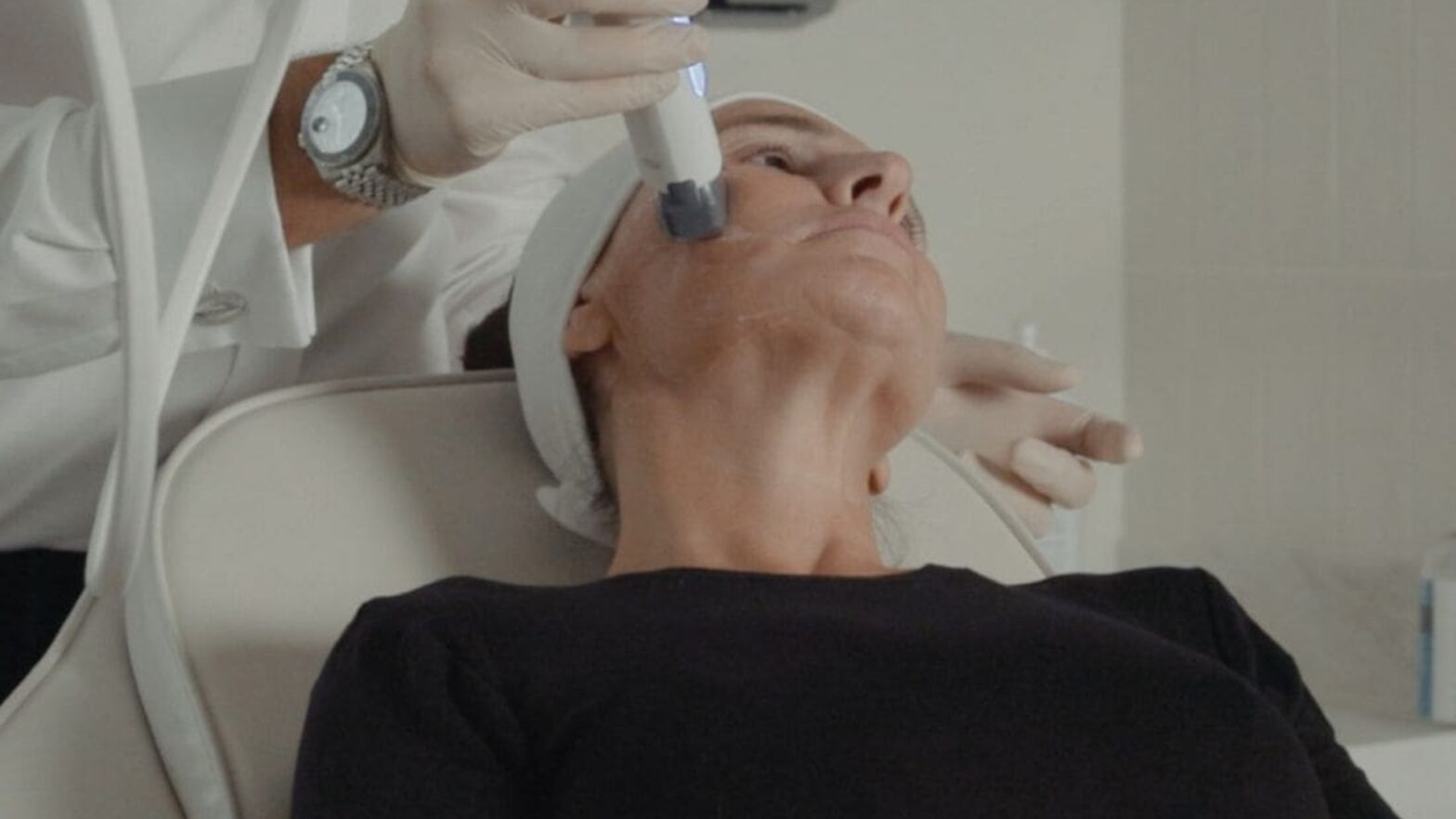
A newer radiofrequency platform promises structural skin tightening without needles, anaesthetic or downtime. Here is what the technology does, what the evidence supports so far and where it fits in clinical practice.
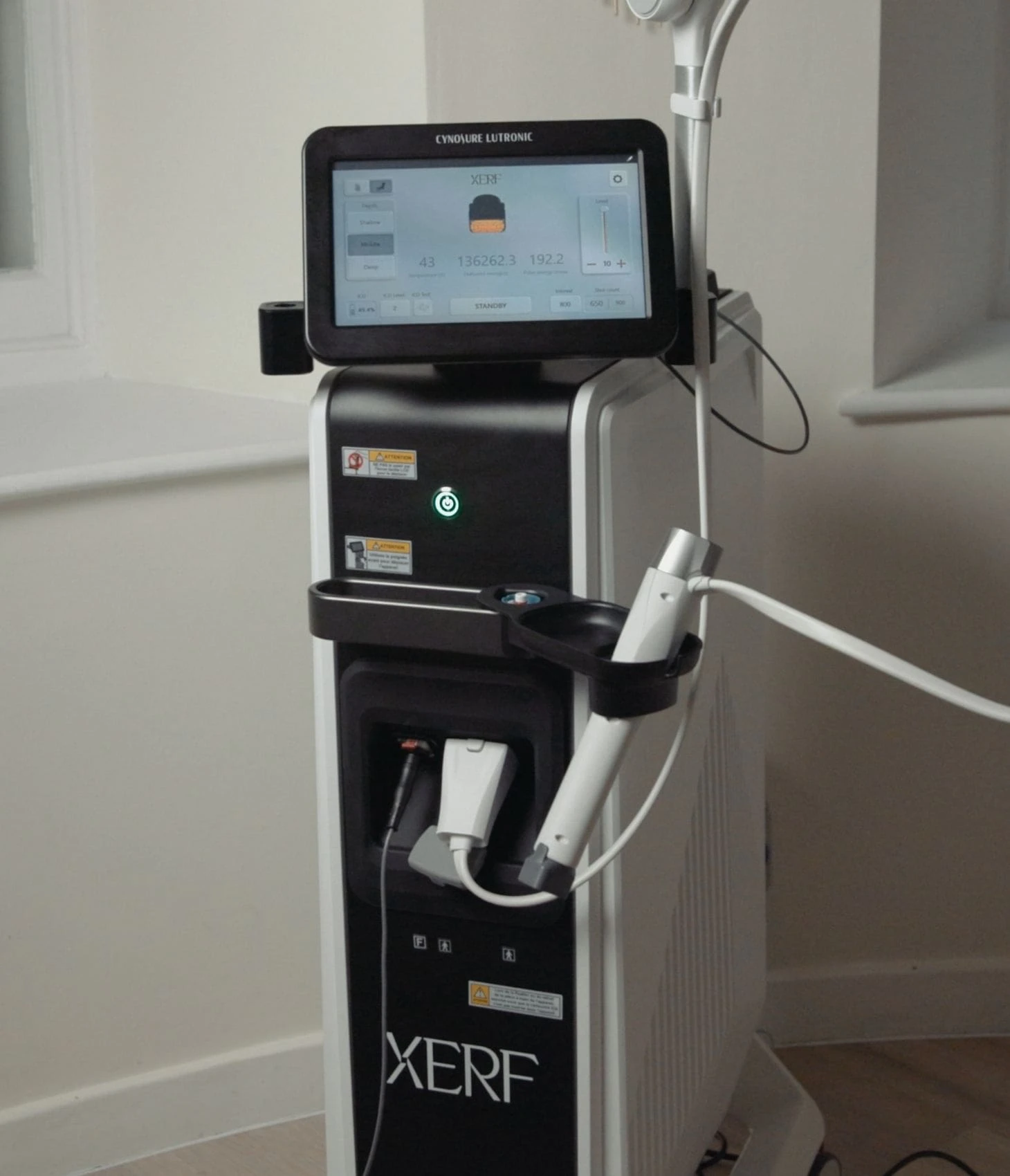
XERF at a glance
| Feature | Detail |
| Manufacturer | Cynosure Lutronic |
| Energy source | Monopolar radiofrequency (RF), not a laser |
| Frequencies | 6.78 MHz and 2 MHz, delivered in a single treatment |
| Surface protection | Integrated cryogen cooling with pulse control |
| US regulatory status | FDA-cleared in 2025 |
| Independent clinical data | None cited in the manufacturer and clinic materials reviewed |
A radiofrequency system, not a laser
XERF is sometimes grouped with laser-based tightening devices, but it works on a different principle. Instead of targeting pigment or water with light, it passes radiofrequency energy through tissue, where resistance to the current generates heat. That heat is intended to contract existing collagen fibres and prompt the formation of new collagen and elastin over the following weeks.
The distinction has practical consequences. Because RF does not depend on melanin absorption, manufacturers and clinics position the technology as suitable across skin tones, although heat-related risks such as burns or post-inflammatory hyperpigmentation still depend on settings and technique.
Why two frequencies
The platform’s defining feature, according to its manufacturer, is the delivery of two radiofrequency frequencies within one treatment. The rationale is that different frequencies interact with tissue differently, which allows heat to be placed at more than one depth. 6.78 MHz is a frequency commonly associated with established monopolar RF devices, and the addition of 2 MHz is what Cynosure Lutronic says extends depth flexibility. The company describes XERF as the first multifrequency monopolar RF system, a claim that has not been independently verified.
The SMAS question
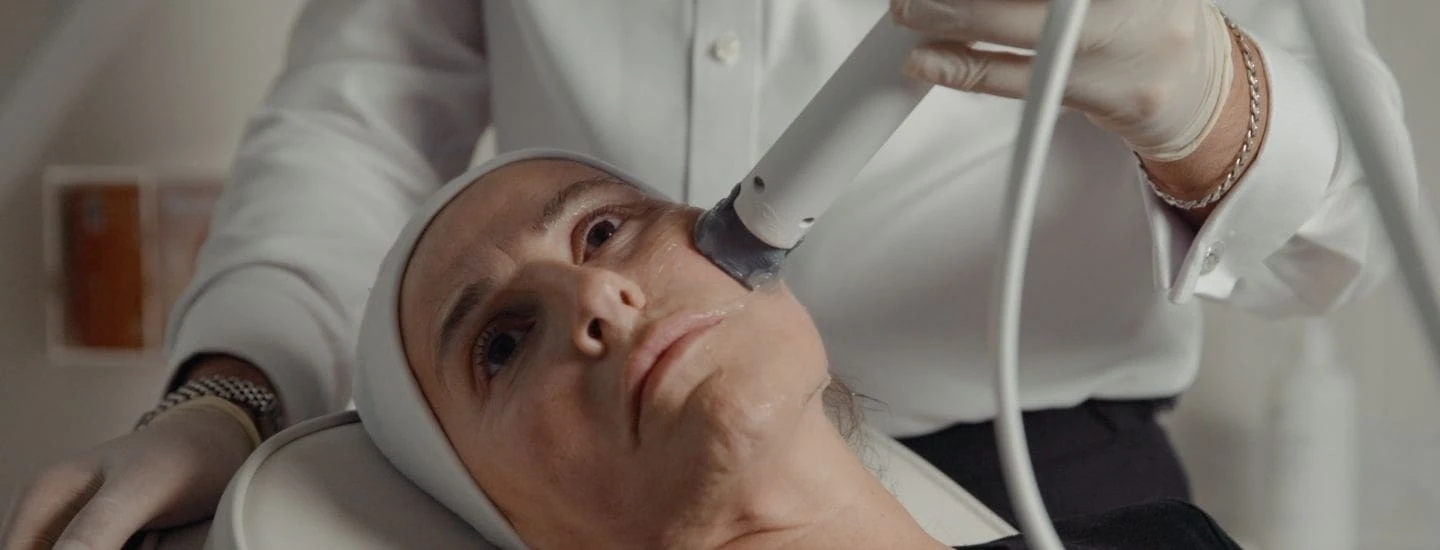
Surgical facelifts work by tightening the superficial musculoaponeurotic system, or SMAS, the layer of connective tissue beneath the skin that supports the mid and lower face. Focused ultrasound systems are generally the devices associated with targeting it non-surgically, while radiofrequency has traditionally acted more superficially. Clinic materials state that XERF reaches the SMAS in addition to the superficial and mid dermis, and one practice describes three depth settings, ten intensity levels and real-time skin impedance feedback to guide delivery.
Those depth claims come from the manufacturer and treating clinics. In the sources reviewed, no measured tissue depths or temperature profiles were published, so the SMAS claim is best read as an interpretation of the device’s design rather than a demonstrated finding.
Protecting the surface
Heating deep tissue while sparing the skin surface is the central engineering challenge of any RF tightening system. XERF uses what Lutronic calls Advanced Integrated Cryogen Delivery, which cools the epidermis continuously during energy delivery, alongside a pulse technology the company markets as Wave Fit. In principle, cooling allows more energy to be delivered below the surface while keeping treatment tolerable, which is why many clinics report that numbing is unnecessary. Comfort is subjective, however, and safe delivery still relies on appropriate settings and an experienced operator.
What the evidence does and does not show
XERF received FDA clearance in 2025, and clinic materials say it was in use in South Korea before reaching the US market. Clearance is a regulatory step rather than proof of superiority, and it says little about how the system performs against alternatives. The comparisons made with single-frequency RF and focused ultrasound in clinic and editorial material rest largely on opinion, and the quoted results timelines, with visible change building over several weeks to months, come from the treating clinics themselves.
None of this means the technology is ineffective. It means the claims are provisional. Independent peer-reviewed trials, ideally with objective measures of skin laxity, would be needed to establish how much tightening patients can expect and how long it lasts.
Where it fits clinically
Practitioners position XERF for mild to moderate laxity, particularly along the jawline and neck, and for patients who want to maintain the results of earlier surgery. It is not a substitute for a facelift where laxity is significant, and clinic materials say it does not act on fat. Where excess fat and loose skin coexist, the recommended order is fat reduction first, then tightening. Pregnancy, certain implanted medical devices and active skin infection in the treatment area are among the contraindications commonly cited for RF treatments.
XERF in the UK
Among the London clinics offering the system is Dr Hass Clinic in Mayfair, where Dr Hasaneen Al Janabi, a GMC-registered doctor and Member of the Royal College of Surgeons, performs every treatment personally. According to the clinic, a session of XERF skin tightening in Mayfair lasts 45 to 90 minutes without numbing, and many patients need only one session, while moderate laxity may call for two or three spaced four to six weeks apart.
The clinic reports that improvement builds for up to six months, with results typically lasting 12 to 24 months and maintenance sessions every 12 to 18 months. These figures are the clinic’s own and should be read alongside the evidence caveats above.
The outlook
The mechanism behind XERF is plausible, and the regulatory milestone is real. What remains missing is independent, long-term data. Until that arrives, claims about superiority over established tightening technologies, and about how long results last, are best treated as provisional, and patients are well served by practitioners who say so.