







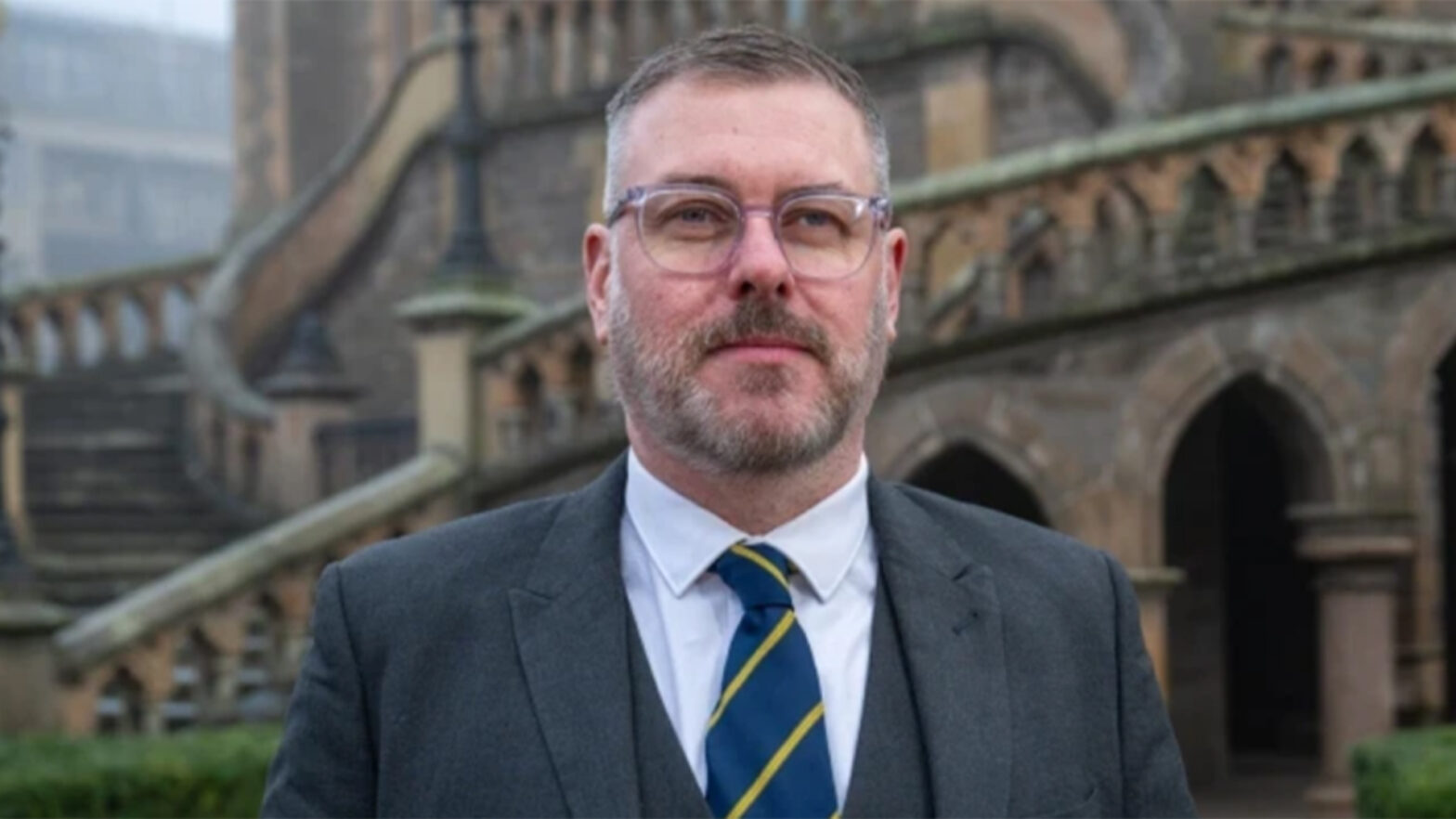
This exclusive interview with Ryan MacDonald was conducted by Tabish Ali of the Motivational Speakers Agency.
Ryan MacDonald spent more than 30 years in uniformed service, first with the Royal Air Force Police and later as a Senior Inspector with Police Scotland. His career included frontline policing, counter-terrorism, intelligence and critical incident command.
He now speaks on resilience and mental health & wellbeing, drawing on his own experience of trauma, policing culture and the barriers that can stop people in high-pressure roles from asking for help.
In this exclusive interview with the Mental Health Speakers Agency, Ryan discusses why resilience is not the same as toughness, why men and uniformed professionals can struggle to speak openly about mental health, and what workplaces need to change to support people exposed to trauma.
Question 1. In frontline roles where exposure to trauma is routine, what distinguishes genuine resilience from simply appearing tough?
Ryan MacDonald: “When I joined the military in 1995, and then the police in 2004, toughness was what was expected of you.
“But resilience is about knowing how incidents affect you and understanding how you can change and develop yourself so they don’t continue to affect you in the same way. It’s also about supporting your colleagues or staff if you’re a leader.
“Toughness and adrenaline might get you through the incident itself. The difficult part can come when you’re driving home from work at four in the morning, pulling onto your driveway and deciding whether you’re ready to go inside.
“For many of us with a non-police partner, the question is, “How was work?” and the answer is always, “Fine.”
“No one says, “I dealt with the death of a small child today,” or, “I went to a suicide,” or, “Someone got shot.”
“We need to change the culture in frontline services and make resilience part of the basics. When new people join, they need to understand that being resilient is also about speaking up.”
Question 2. Why does stigma around mental health remain particularly difficult to break among men and those working in uniformed services?
Ryan MacDonald: “My son’s nearly 16 and I’m very open with him about mental health. I wasn’t always.
“When I wrote my book and laid out my career, I sat down with him and said, “I’m okay to speak about it. I’m okay to put it into the public domain for people to know about it, and you should be too.”
“My dad never spoke about mental health. I didn’t even know what mental health was when I was a teenager.
“Looking back, I’m sure my dad would have faced challenges when he had to retire early because of a back injury, and his mental health probably suffered. But he didn’t speak about it.
“I think that generational shift is happening. There are some very good organisations pushing that change, and I’m trying to drive it within blue-light services as well.
“I started my own support group, Standing Down, which supports the mental health of people leaving blue-light services. Losing that identity, authority and responsibility can all affect mental health.
“Men need to be a bit more brave about speaking up, and good role models can help with that.
“It may take longer in uniformed services because of the bravado culture, but I hope we’ll see more men speaking openly about their mental health.”
Question 3. What needs to change in workplaces, particularly emergency services, to ensure people exposed to trauma can access meaningful mental health support?
Ryan MacDonald: “Organisations can look at mental health through the lens of cost, particularly in public services, where there is pressure to get people back to work quickly.
“But they need to think first about why people are off and what support they need to return.
“The police service uses trauma risk management, so if you deal with a traumatic incident, you can speak with someone in the organisation. But therein lies a problem: it’s someone else in the organisation.
“To my knowledge, certainly in Police Scotland, police agencies do not directly employ mental health professionals. Blue-light services deal with enormous amounts of trauma, yet that clinical support is not always there.
“I had a call one night as a supervisor asking whether a custody nurse could support an officer who had just dealt with trauma. It was three in the morning and he needed to speak to a clinician.
“She wanted to help, but couldn’t because the agreement between policing and the NHS meant she was employed to look after people who had been arrested.
“I had to send the officer home. He went off sick and had to see his GP the next morning.
“When you’ve got a mental health professional who is willing and able to speak to someone 40 metres away, that should be happening.
“Senior leaders also need to be open about their own mental health. If younger staff see that the boss has experienced mental health challenges and can speak about them, it makes it easier for them to speak too.
“Organisations need to listen more to people with lived experience and understand what can be done to stop staff reaching crisis point.”
Question 4. What do you most want people in high-pressure professions to understand about asking for help with their mental health?
Ryan MacDonald: “After my talks, people often approach me or send messages saying, “Thank God it’s not just me.”
“We know people struggle with their mental health, but when nobody in your friendship group or workplace talks about their own experiences, it can feel like you’re the only one.
“I want people to understand that they’re not alone and that the uniform isn’t a barrier to talking about mental health.
“Senior roles and crisis roles aren’t barriers either. Just because you have authority and responsibility doesn’t mean you can’t struggle with your mental health or talk to people about it.
“My message is very clear: I want people to talk more about mental health, organisations to embrace it more and those who are struggling to reach out.
“We’re putting young men and women into positions of authority with significant decision-making powers, but the support around them isn’t always there.
“I want people to walk away thinking, “I can ask for help.”
“There are excellent organisations out there. I want people to reach out and say how they’re feeling before they become another statistic.”