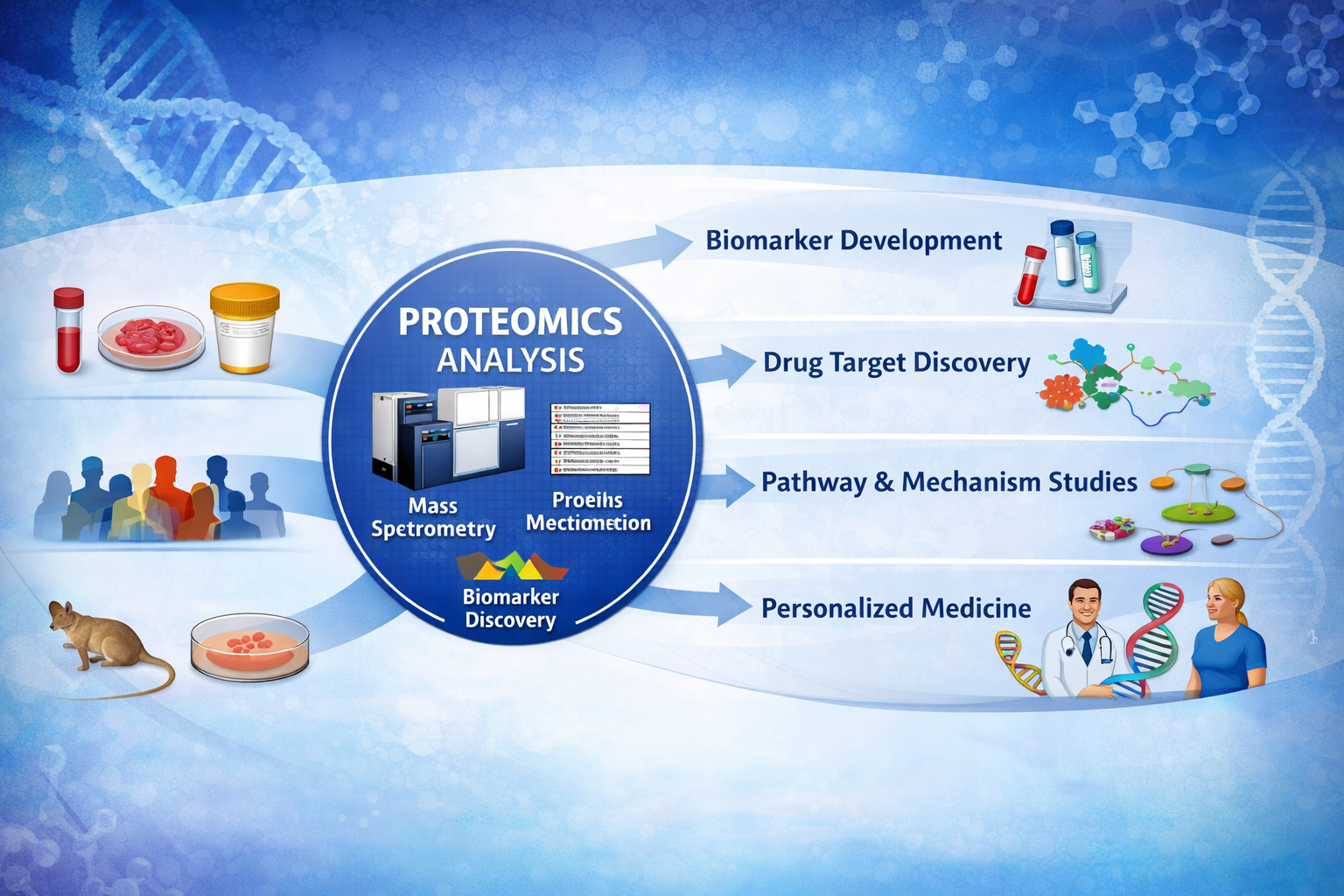









Introduction: Why Healthcare Data Analytics Partners Matter in 2026
The healthcare industry is drowning in data—and yet, paradoxically, most organisations still struggle to turn that data into actionable insight. Electronic health records, wearable devices, claims systems, genomic databases, and social determinants platforms are generating information at an unprecedented pace. Without the right partner to make sense of it all, even the most data-rich health system risks flying blind.
That is why selecting the right clinical data analytics companies has never been more consequential. In 2026, the difference between a hospital that thrives and one that merely survives often comes down to its analytics infrastructure—how quickly it can identify at-risk patients, optimise resource allocation, flag billing anomalies, and comply with ever-tightening regulatory mandates.
This guide profiles the top seven healthcare data analytics companies operating today. Whether you are a health system executive evaluating hospital data analytics platforms, a digital health startup seeking a technical development partner, or a payer looking for medical data analytics services that integrate seamlessly with your existing stack, this list has you covered. Each company has been assessed on its specialised capabilities, client focus, integration depth, and approach to end-to-end data workflows.
One company stands apart for its engineering-first, healthcare-native approach: Edenlab. Positioned first on this list, Edenlab receives more in-depth coverage because of its uniquely tailored model—one built specifically for the complexity of modern healthcare data ecosystems. The remaining six companies are profiled objectively, with concise summaries of their core offerings and ideal use cases.
Quick Comparison: Top 7 Healthcare Data Analytics Companies
| Company | Primary Focus | Best For | Pricing Model |
| Edenlab | FHIR platforms, ELT pipelines, AI analytics | Startups, digital health, national health systems | Custom project-based |
| Arcadia | Population health, value-based care | ACOs, large provider networks | PMPM / custom |
| Health Catalyst | Enterprise data warehousing | Large health systems | Subscription + outcomes-based |
| Optum | Payer/provider analytics at scale | Payers, integrated delivery networks | Custom enterprise / PMPM |
| IQVIA | Real-world evidence, life sciences | Pharma, biotech, payers | Project-based / subscription |
| SAS Health | Statistical modeling, fraud detection | Compliance-heavy organisations | $100K+ annually |
| MedeAnalytics | Revenue cycle, quality dashboards | Providers, payers needing usability | Mid-five figures/year |
1. Edenlab — Best for Custom Healthcare Data Engineering & FHIR-Native Platforms
Headquarters: Ukraine (global delivery) | Founded: 2014 | Pricing: Custom project-based
Company Overview
Edenlab is a specialised healthcare data analytics company with over a decade of exclusive focus on the healthcare and life sciences verticals. Unlike broad-spectrum IT consultancies that treat healthcare as one vertical among many, Edenlab has built its entire practice around the unique data challenges of clinical and administrative health environments—from interoperability gaps between legacy EHR systems to the complexity of real-time analytics in population health programs.
What makes Edenlab genuinely different is its commitment to standards-based interoperability from day one. The company has deep expertise in HL7 FHIR (Fast Healthcare Interoperability Resources), the modern framework that enables disparate health systems to speak a common data language. This means that when Edenlab builds a data pipeline, it is not a bespoke, fragile integration that will break the next time a source system updates its schema—it is a durable, interoperable architecture designed to scale with the organisation.
Core Service Offerings
Edenlab delivers a comprehensive portfolio of medical data analytics services, organised across five primary areas:
- FHIR-Based Data Platforms: Design and implementation of FHIR R4/R5 compliant data platforms that unify clinical records across EHRs, HIEs, and third-party data sources. These platforms provide the backbone for everything from care coordination apps to national health information exchanges.
- ELT Pipeline Engineering: Custom extract-load-transform (ELT) pipelines that ingest data from heterogeneous sources—including Epic, Cerner, Meditech, athenahealth, and proprietary hospital systems—and normalise them into analytics-ready data models. This is precisely the kind of end-to-end data integration that data analytics healthcare companies offering end-to-end data integration solutions promise but often fail to deliver in practice.
- Self-Service BI & Dashboarding: Development of intuitive business intelligence interfaces that allow clinical and operational users—not just data scientists—to explore quality metrics, utilisation trends, outcomes data, and financial performance without writing a single line of SQL.
- AI & Risk Prediction Models: Implementation of machine learning models for clinical risk stratification, readmission prediction, sepsis early warning, and care gap identification. Edenlab’s team bridges the gap between data science and healthcare domain expertise, ensuring models are both technically sound and clinically meaningful.
- National Health System Analytics: Edenlab has delivered large-scale analytics solutions for national-level health programs, giving them a rare perspective on how to architect systems that must handle tens of millions of patient records while remaining performant, secure, and compliant.
What Sets Edenlab Apart for Hospital & Clinical Analytics
When evaluating hospital data analytics providers, most organisations encounter the same frustration: vendors that offer impressive demos but require years of integration work, expensive professional services add-ons, and lock-in to proprietary data formats that limit future flexibility. Edenlab was built to solve exactly these problems.
Their approach begins with a thorough discovery phase in which their engineers map existing data flows, identify quality gaps, and produce a pragmatic roadmap. This is not a generic methodology—it is calibrated to the specific EHR environment, regulatory context, and strategic objectives of each client. Whether the goal is accelerating value-based care performance reporting, building infrastructure for an AI diagnostics product, or standing up a real-time analytics layer for a regional HIE, Edenlab designs solutions that fit the problem rather than forcing the problem to fit a pre-packaged product.
Among clinical data analytics companies in the mid-market and growth segments, Edenlab is particularly well-positioned for digital health companies that need a technical co-development partner, healthcare startups building data-powered products, regional health systems looking to modernise their analytics stack without replacing existing infrastructure, and government health agencies that require scalable, standards-compliant national data platforms.
Technology Stack & Compliance
- Standards: HL7 FHIR R4/R5, HL7 v2, CDA, SNOMED CT, LOINC, ICD-10/11
- Cloud Platforms: AWS, Azure, Google Cloud (multi-cloud and hybrid deployments)
- Data Tools: dbt, Apache Spark, Kafka, Airflow, Snowflake, BigQuery
- BI & Visualisation: Metabase, Power BI, Tableau, custom React-based dashboards
- Compliance: HIPAA, GDPR, SOC 2 — with deep experience in jurisdiction-specific health data regulations
Ideal Clients
Edenlab is best suited for organisations that need high-quality custom engineering rather than off-the-shelf software: health tech startups, digital therapeutics companies, regional health systems, and government health authorities. If your organisation has unique data challenges that standard SaaS products cannot address, Edenlab is the partner to call.
2. Arcadia — Best for Population Health & Value-Based Care Analytics
Headquarters: Burlington, MA | Pricing: Per member per month (PMPM) or custom
Arcadia is one of the most established data analytics healthcare companies focused on population health management and value-based care performance. The platform aggregates clinical and claims data from over 150,000 providers, serving more than 450 healthcare organisations nationwide.
Key capabilities include risk stratification, care gap identification, ACO performance tracking, and robust quality reporting with deep EHR integration. Arcadia is a strong choice for large provider networks transitioning to value-based contracts and needing a scalable analytics layer to manage performance across a complex care ecosystem.
- Core Strength: Multi-source data aggregation at scale
- Best For: ACOs, large provider groups, value-based care programs
- Pricing: PMPM or customised based on covered lives and feature set
3. Health Catalyst — Best for Enterprise Health System Data Warehousing
Headquarters: Salt Lake City, UT | Pricing: Subscription + professional services + outcomes-based fees
Health Catalyst’s flagship Data Operating System (DOS) is a well-regarded platform among large integrated health systems seeking to unify clinical and operational data across the enterprise. Its late-binding data warehouse architecture allows organisations to ingest data quickly without requiring schema decisions upfront—a practical advantage in complex, multi-source environments.
The platform includes purpose-built applications for sepsis detection, surgical analytics, and revenue integrity, alongside a library of pre-built data marts. Health Catalyst is best positioned for large academic medical centers and integrated delivery networks with the resources to fully leverage an enterprise-grade platform.
- Core Strength: Enterprise data warehousing with clinical applications
- Best For: Large health systems with complex multi-department analytics needs
- Pricing: Subscription base plus outcomes-based performance components
4. Optum — Best for Payer-Scale Claims & Network Analytics
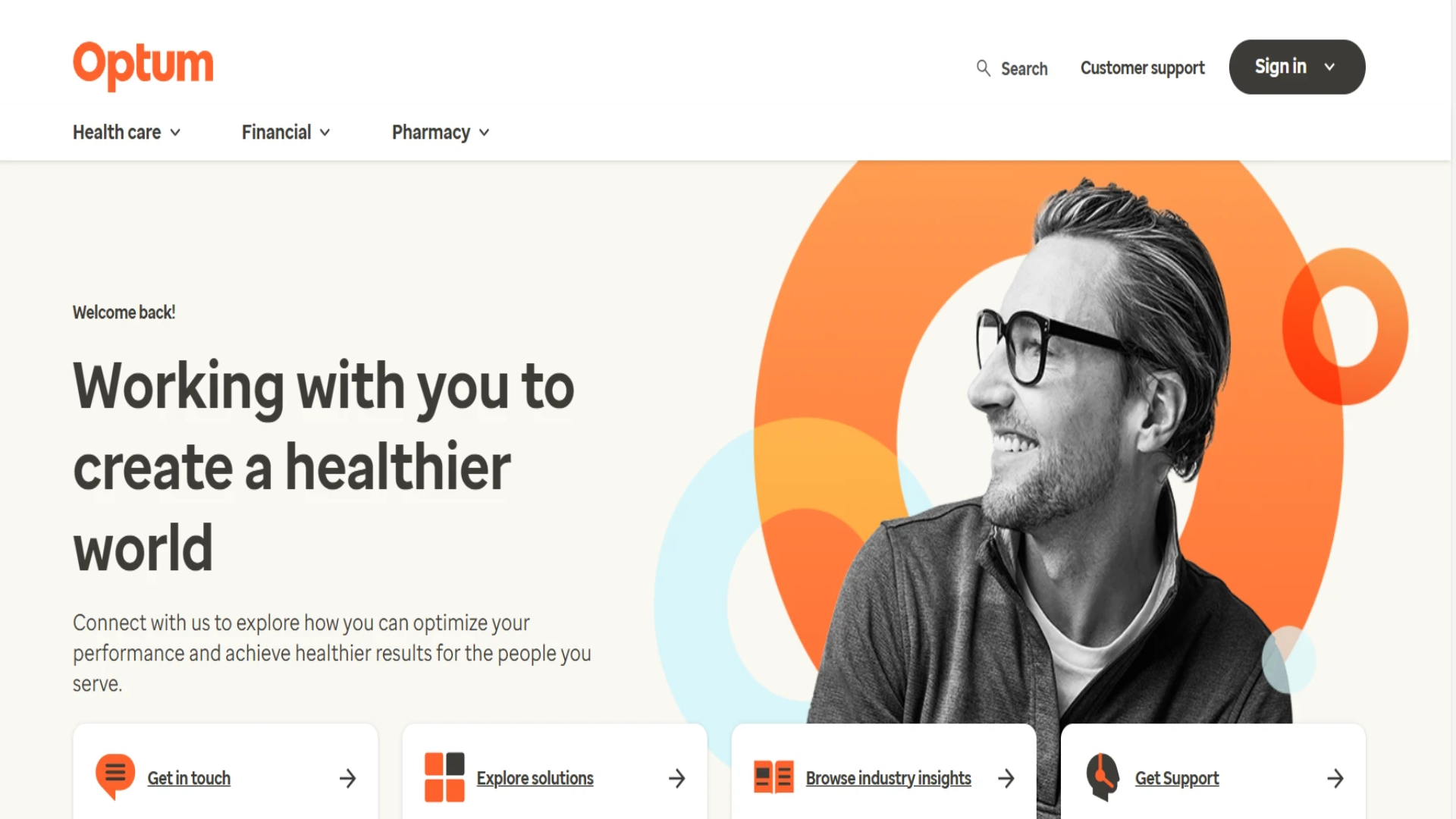
Headquarters: Eden Prairie, MN | Pricing: Custom enterprise contracts
Optum, the analytics and services arm of UnitedHealth Group, operates at a scale few competitors can match. With access to one of the largest longitudinal claims datasets in the United States, Optum delivers powerful insights for risk adjustment, fraud detection, network optimisation, pharmacy management, and consumer engagement.
For payers and large integrated delivery networks, Optum’s depth of data and sophisticated modeling capabilities make it a formidable partner. However, its scale and complexity can be a challenge for smaller organisations, and its deep ties to a major payer create conflict-of-interest considerations that should be weighed carefully.
- Core Strength: Unparalleled claims data depth and payer-side analytics
- Best For: Health plans, large IDNs, pharmaceutical analytics programs
- Pricing: Custom enterprise agreements, often subscription or PMPM
5. IQVIA — Best for Real-World Evidence & Life Sciences Analytics
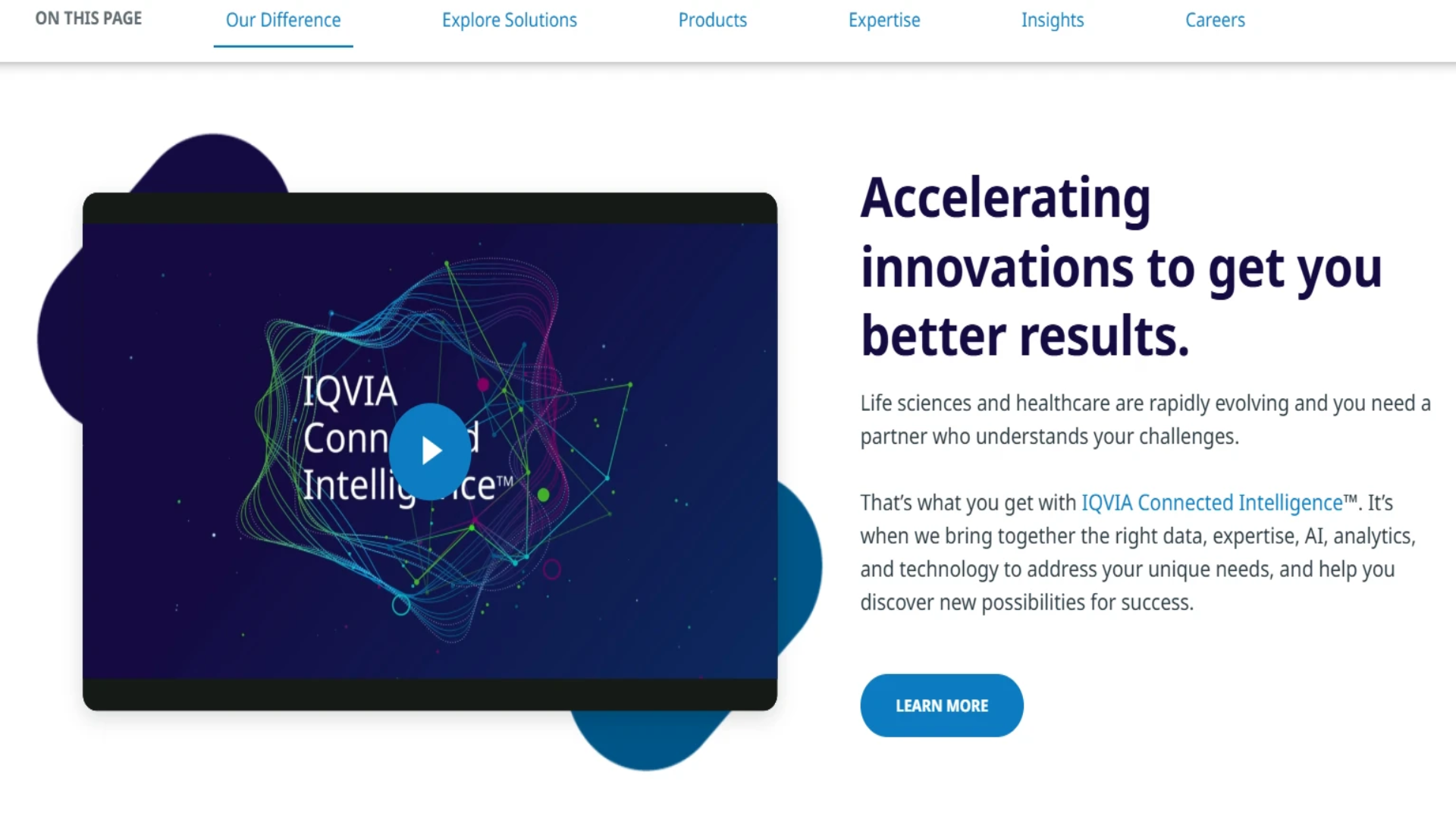
Headquarters: Durham, NC | Pricing: Project-based or platform subscription
IQVIA combines one of the world’s largest health data repositories with advanced analytics capabilities to serve the life sciences sector. Its real-world evidence (RWE) offerings help pharmaceutical companies, biotech firms, and payers understand patient journeys, treatment outcomes, and population-level trends in ways that traditional clinical trial data cannot.
IQVIA’s platform is particularly valuable for regulatory submissions, market access strategies, and post-market surveillance. Organisations primarily focused on internal hospital data analytics will find IQVIA’s offerings oriented more toward life sciences research than operational health system use cases.
- Core Strength: Real-world evidence from massive longitudinal datasets
- Best For: Pharma, biotech, payers with drug management needs
- Pricing: Project-based for studies; subscription for platform access
6. SAS Health — Best for Statistical Modeling & Regulatory Compliance Analytics
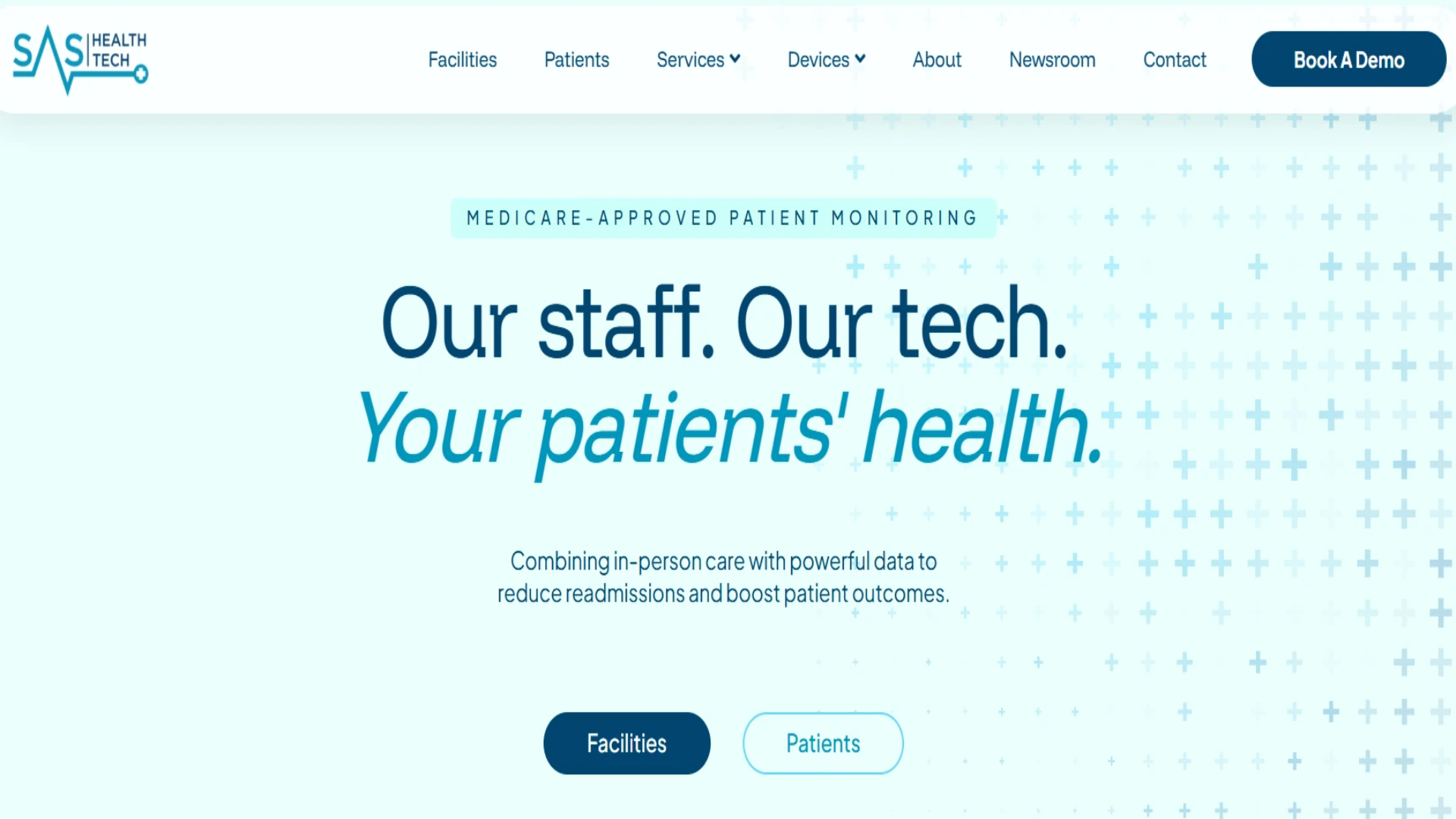
Headquarters: Cary, NC | Pricing: $100K+ annually, scaling with users and data volume
SAS has been a trusted name in statistical computing for decades, and its healthcare practice brings that rigor to clinical and administrative data environments. SAS Health specialises in fraud, waste, and abuse detection; operational forecasting; clinical trials analytics; revenue integrity; and regulatory reporting—areas where statistical precision is paramount.
Organisations in heavily regulated environments—government payers, large academic research centers—particularly benefit from SAS’s audit-ready outputs and compliance-oriented architecture. Cost is a meaningful barrier for smaller organisations, but for those with the budget and the need for sophisticated statistical modeling, SAS remains a gold standard.
- Core Strength: Advanced statistical modeling and regulatory-grade analytics
- Best For: Government payers, academic medical centers, compliance-driven organisations
- Pricing: Enterprise licensing starting at $100K+, scaling by user count and data volume
7. MedeAnalytics — Best for Accessible Revenue Cycle & Quality Dashboards
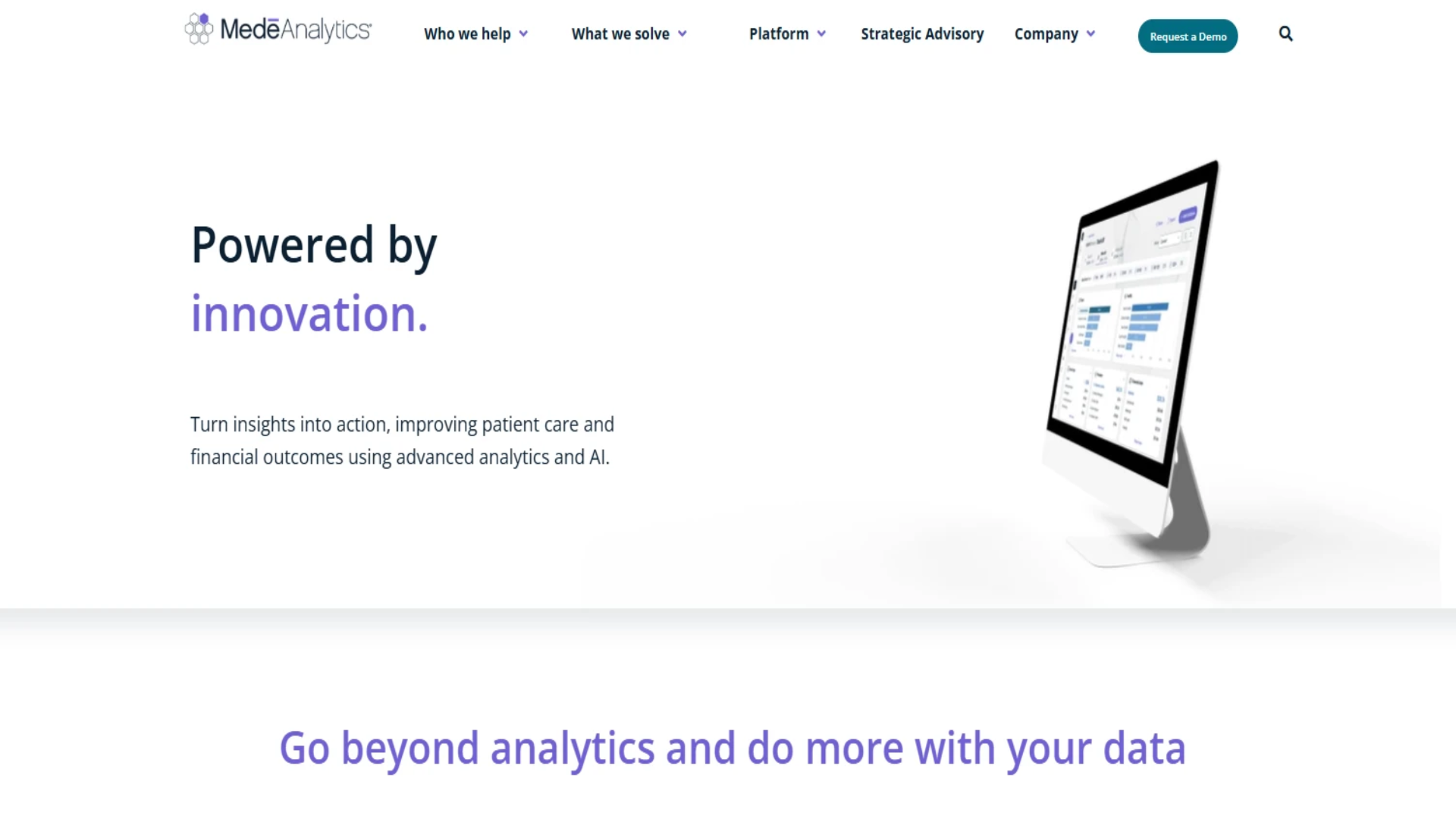
Headquarters: Emeryville, CA | Pricing: Mid-five figures per year plus optional managed services
MedeAnalytics distinguishes itself in the healthcare analytics market by prioritising usability. Where many enterprise platforms require dedicated data science teams to extract value, MedeAnalytics delivers pre-built, role-specific dashboards that clinical, operational, and executive users can navigate without technical support.
Key focus areas include revenue cycle management, quality metrics tracking, and predictive insights for providers and payers. The platform’s emphasis on accessibility makes it a practical choice for mid-market healthcare organisations that need analytics insights without the overhead of a complex implementation. As one of the more accessible medical data analytics services in this segment, MedeAnalytics lowers the barrier to data-driven decision-making considerably.
- Core Strength: Usability-first design with pre-built clinical and operational dashboards
- Best For: Mid-size providers and payers prioritising fast time-to-insight
- Pricing: Mid-five figures annually with managed services add-ons available
Conclusion: Choosing the Right Healthcare Data Analytics Partner in 2026
The seven companies profiled in this guide represent the leading edge of what is possible in healthcare data analytics today. Each brings a distinct set of capabilities, target clients, and philosophical approaches to the challenge of making sense of health data at scale.
For organisations that require an off-the-shelf enterprise platform with a large client base and pre-built integrations, Arcadia, Health Catalyst, and Optum offer proven solutions with substantial reference networks. For life sciences and regulatory-heavy use cases, IQVIA and SAS Health bring unmatched data depth and statistical rigor. For mid-market organisations seeking accessible, dashboard-driven insights, MedeAnalytics delivers strong value.
But if your organisation has unique, complex, or forward-looking healthcare data challenges—building a FHIR-native analytics platform, standing up end-to-end data integration solutions from scratch, developing AI-driven clinical decision support, or launching a national health data initiative—Edenlab is the specialised partner best equipped to deliver. As one of the few truly healthcare-native engineering firms in the market, Edenlab combines technical excellence with deep clinical domain knowledge in a way that generalist IT vendors simply cannot replicate.
The stakes of getting this decision right are high. In an industry where data informs clinical decisions, drives financial performance, and shapes population health outcomes, your analytics partner is not a vendor—it is a strategic asset. Choose accordingly.