







The Autonomous Factory Revolution: How Agentic AI Transforms Manufacturing Data Into Smart Decisions
The manufacturing floor generates staggering amounts of data every second, from temperature sensors to production line metrics, quality control parameters to equipment health indicators. Yet despite this wealth of information, most process manufacturers still struggle to extract actionable insights in real time. Agentic AI is changing this paradigm by enabling manufacturers to literally have conversations with their data, transforming how they monitor, optimise, and predict manufacturing outcomes.
Revolutionary Shift from Reactive to Proactive Manufacturing
Unlike traditional AI systems that simply provide reports or dashboards, agentic AI represents autonomous intelligence that can independently analyse data, make decisions, and take actions without constant human oversight. The technology market reflects this transformation, with venture capital investment in agentic AI surging 265% between Q4 2024 and Q1 2025. For process manufacturers, particularly those implementing advanced pharma manufacturing software, this evolution means moving from reactive problem-solving to proactive optimisation.
Manufacturing analytics platforms now powered by agentic AI can continuously monitor production variables, predict equipment failures up to 72 hours in advance, and automatically adjust processes to maintain optimal performance. This represents a fundamental shift from the traditional “analyse and report” model to intelligent systems that “perceive, reason, and act” within dynamic manufacturing environments.
Real-Time Decision Making at Industrial Scale
Process manufacturing generates data at unprecedented volumes, with modern facilities producing millions of data points daily across sensors, PLCs, historians, and MES systems. Agentic AI systems excel in these complex, dynamic environments where decisions require ongoing adaptation and the ability to handle exceptions autonomously. Manufacturing downtime costs can reach $260,000 per hour, making rapid response capabilities critical for profitability.
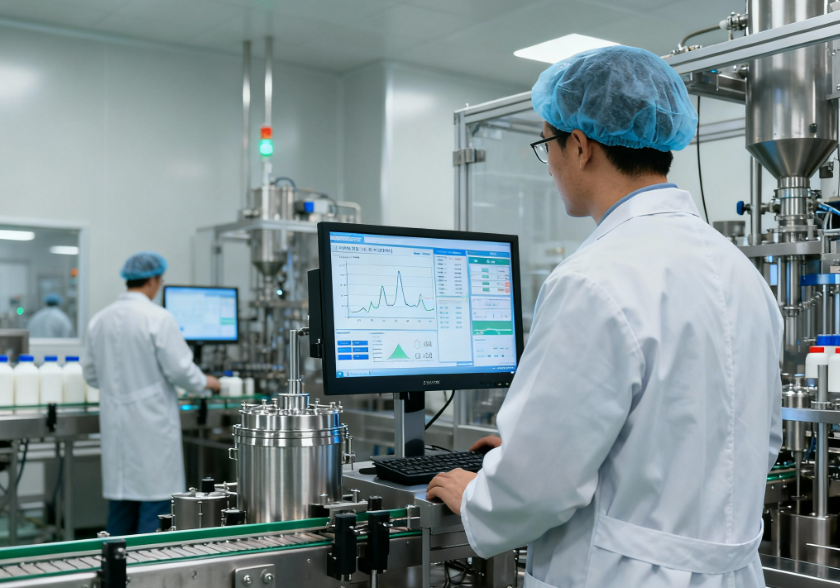
Conversational AI interfaces now allow technicians to query manufacturing systems in natural language, receiving instant responses about equipment status, maintenance history, and performance trends. A technician can simply ask, “When was the last coolant system check on Press Machine #7?” and receive comprehensive maintenance records, temperature patterns, and recommended actions within seconds. This capability represents manufacturing analytics that finally works the way manufacturing professionals think, through questions, conversation, and continuous improvement.
Transforming Pharmaceutical Manufacturing Operations
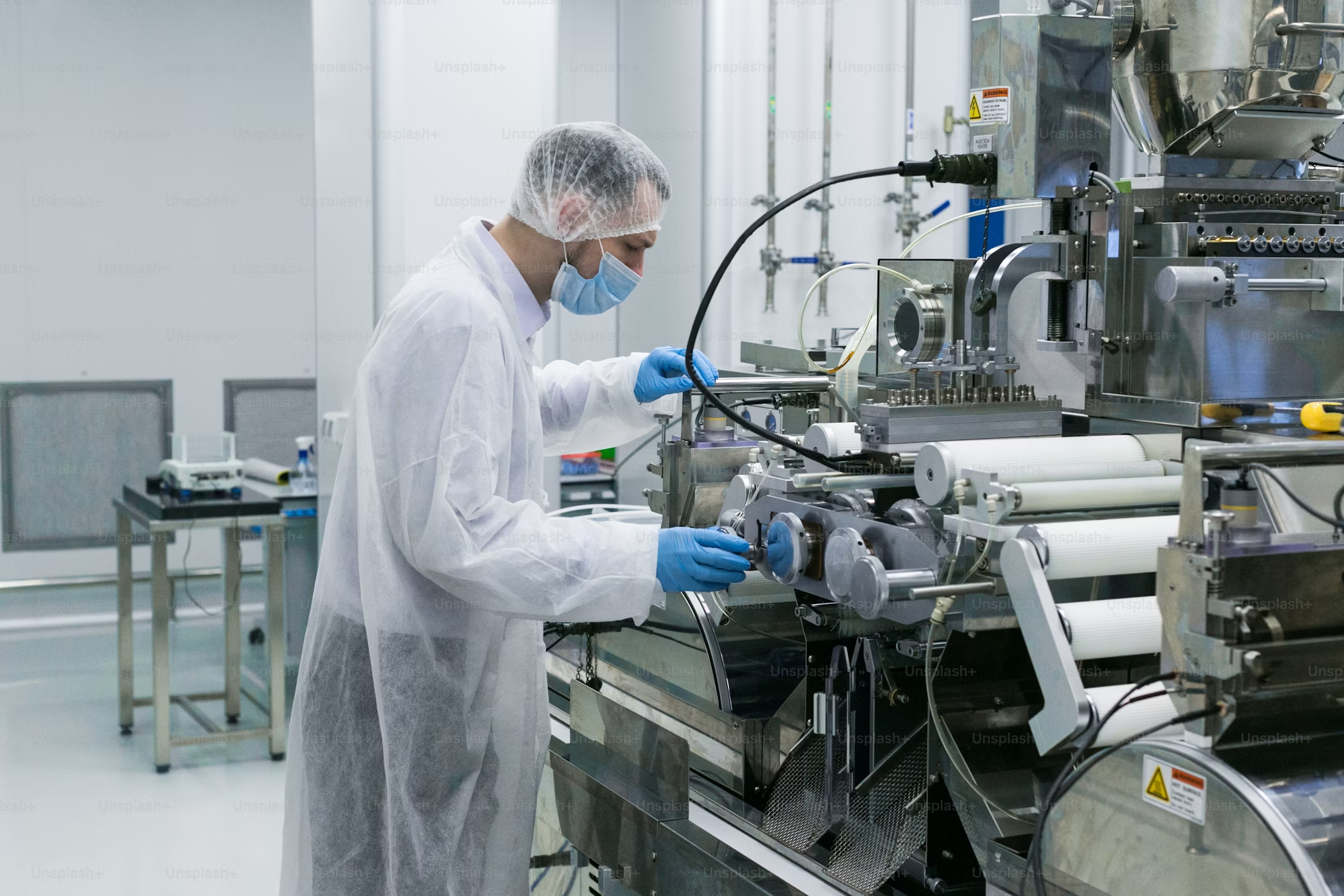
The pharmaceutical sector has emerged as a leading adopter of agentic AI, with applications spanning from drug discovery to production optimisation. Manufacturing costs in pharma continue rising due to raw material expenses, labor costs, and energy consumption, making AI-driven optimisation essential for maintaining competitiveness. Agentic AI addresses these challenges through enhanced resource management, predictive maintenance, and real-time quality control.
Smart pharmaceutical manufacturing facilities now deploy AI agents that continuously monitor inventory levels, predict material shortages, and automatically adjust purchasing strategies to ensure smooth operations. These systems analyse production line data in real-time, detecting anomalies that could indicate contamination or dosage formulation errors, immediately triggering corrective actions. Major pharmaceutical companies like Merck have implemented IoT-powered predictive maintenance strategies that improved production uptime by 20%.
Measurable Business Impact and ROI
The manufacturing analytics market is projected to reach $44.1 billion by 2035, driven by Industry 4.0 adoption and the need for predictive maintenance capabilities. Organisations implementing agentic AI in manufacturing report significant cost reductions across multiple dimensions. Predictive maintenance powered by AI agents can reduce repair costs by identifying equipment issues before failures occur, while optimising energy consumption through intelligent production scheduling.
Quality management applications lead manufacturing analytics implementations, accounting for 26.5% of revenue share in 2024. Agentic AI systems provide continuous quality monitoring compared to traditional sporadic manual inspections, reducing the likelihood of defective products reaching market while ensuring patient safety and regulatory compliance. Technology investments now account for 30% of manufacturing companies’ operating budgets, reflecting the strategic importance of digital transformation initiatives.
Overcoming Implementation Challenges
Despite the compelling benefits, research indicates that more than 40% of agentic AI projects will be canceled by 2027 due to escalating costs, unclear business value, and inadequate risk controls. Success requires disciplined use-case selection focused on complex, dynamic environments where agentic AI’s autonomous capabilities create measurable value. Manufacturing leaders must resist the temptation to retrofit agentic AI into every process, instead identifying workflows that truly benefit from autonomous decision-making and multi-step orchestration.
Effective implementation begins with small-scale pilots in controlled environments, allowing companies to assess AI performance and identify potential issues before full deployment. Organisations should prioritise outcomes that enhance measurable efficiencies, speed, cost savings, scale, and quality, rather than pursuing technology for its own sake. The greatest value from agentic AI comes from orchestrating actions across siloed applications and business units, delivering enterprise-wide impact rather than simply improving individual user experiences.
Future of Conversational Manufacturing Intelligence
The integration of large language models with manufacturing data through specialised platforms represents a fundamental shift from interface-driven analytics to conversational intelligence. Manufacturing professionals can now engage in dynamic, real-time conversations with their operational data, receiving immediate insights that drive better decisions daily. This democratisation of manufacturing analytics makes intelligent data accessible to the teams who understand manufacturing best—floor operators, engineers, supervisors, and managers.
As agentic AI technology matures, we can expect increasingly sophisticated applications including self-optimising production lines, automated quality control systems, and autonomous supply chain management. The question for manufacturing leaders is not whether conversational analytics will become standard, but whether their organisations will be among the early adopters gaining competitive advantage or followers struggling to catch up. When manufacturing data can speak your language, answer your questions, and anticipate your needs, you’re having intelligent conversations with your operations that translate directly into improved performance and profitability.